
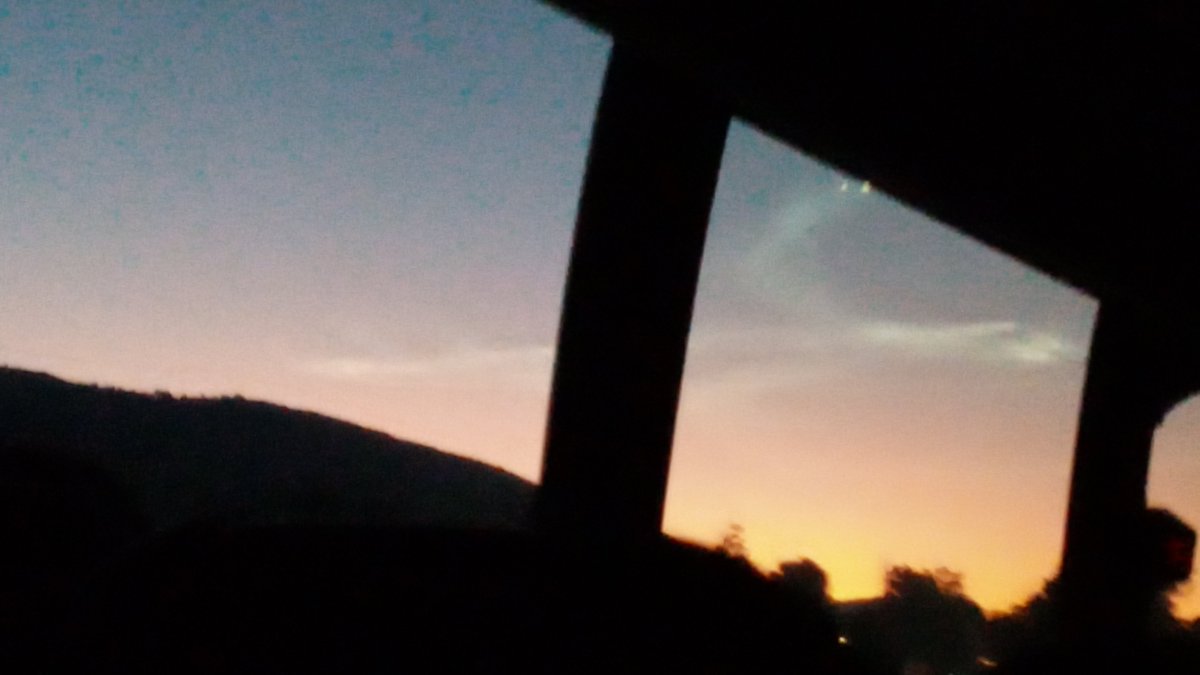
Celestial Shift: Unpacking the Viral Fleur-de-Lis Sighting Over California
A curious phenomenon has recently captured the attention of Californians and social media users alike. The trending topic, sparked by observations of a celestial symbol resembling a fleur-de-lis replacing the familiar crescent moon and star in the California sky, has ignited widespread discussion and speculation. While the estimated tweet count is currently at zero, the visual impact and intriguing nature of the sighting are rapidly fueling its spread across various online platforms.
The initial observation, expressed simply as, “I used to see a crescent moon and star over California all the time. Today it was a flor De leis,” has resonated with many who claim to have witnessed a similar change. Social media platforms, particularly X (formerly Twitter), are now flooded with images and comments attempting to explain or interpret this unusual occurrence. Some users are sharing photographs, while others are offering theories ranging from atmospheric anomalies to symbolic interpretations.
Delving into the comments and images circulating online reveals a mix of awe, confusion, and skepticism. Some individuals are attributing the phenomenon to unusual weather patterns or light refractions, while others are exploring more esoteric explanations. The fleur-de-lis, a stylized lily historically associated with French royalty and various cultural symbols, adds another layer of intrigue to the sighting. This section aims to unpack this viral sensation, exploring the observations, theories, and social media reactions surrounding California’s unexpected celestial shift.
From Crescent Moon to Fleur-de-Lis: Decoding California’s Sky and Social Media Frenzy
The recent buzz surrounding a perceived “fleur-de-lis” shape in the California sky, replacing the familiar crescent moon, has ignited a fascinating blend of astronomical curiosity and social media speculation. But what exactly is going on? Is this a genuine celestial event, an optical illusion, or something else entirely?
While the initial reaction might be to search for extraordinary explanations, it’s crucial to ground ourselves in basic astronomy. The moon’s phases are determined by the relative positions of the sun, Earth, and moon. A crescent moon appears when we see only a sliver of the moon’s illuminated surface. The perceived change in shape, from a crescent to something resembling a fleur-de-lis, is unlikely to be a sudden transformation of the moon itself.
More plausible explanations involve atmospheric conditions, light refraction, or even the way our brains interpret visual information. Atmospheric phenomena can distort the appearance of celestial objects, causing them to appear elongated, blurred, or even take on unusual shapes. Furthermore, the human eye and brain are prone to optical illusions, especially when observing distant objects through varying atmospheric conditions.
The social media frenzy surrounding this event highlights our collective fascination with the sky and our eagerness to find meaning in unusual occurrences. While a definitive scientific explanation may take time, the “fleur-de-lis moon” serves as a reminder of the power of observation, the beauty of the night sky, and the captivating nature of shared experiences in the digital age.
California’s Celestial Anomaly: A Social Media Deep Dive into the Fleur-de-Lis Phenomenon
The buzz surrounding the “Fleur-de-Lis” sighting over California has exploded across social media platforms, transforming a curious observation into a full-blown phenomenon. What began as a simple comment – “I used to see a crescent moon and star over California all the time. Today it was a flor De leis” – has sparked widespread discussion and speculation, despite an estimated tweet count of zero initially suggesting a niche interest. This section delves into the social media frenzy, analyzing how the observation gained traction and the various interpretations it has fueled.
Platforms like X (formerly Twitter) are awash with images and comments, ranging from genuine curiosity to playful conspiracy theories. Users are sharing photos, often comparing the alleged Fleur-de-Lis shape to the more familiar crescent moon. A deeper dive into the comments reveals a spectrum of reactions. Some users are attributing the change to atmospheric conditions or unusual celestial alignments. Others are suggesting more esoteric explanations, linking the symbol to historical or even mythical narratives. The lack of a definitive explanation has only amplified the online conversation, turning the California sky into a canvas for collective interpretation.
The social media trend highlights the power of shared observation and the human tendency to seek patterns and meaning in the world around us. While the scientific community may offer explanations rooted in astronomy and atmospheric science, the social media narrative is driven by something more – a collective sense of wonder and a desire to connect with others through shared experiences. The “Fleur-de-Lis” phenomenon serves as a fascinating case study in how social media can amplify and transform a simple observation into a cultural moment.