
The Trending Debate: Scriptural Authority, Peter’s Primacy, and the Church
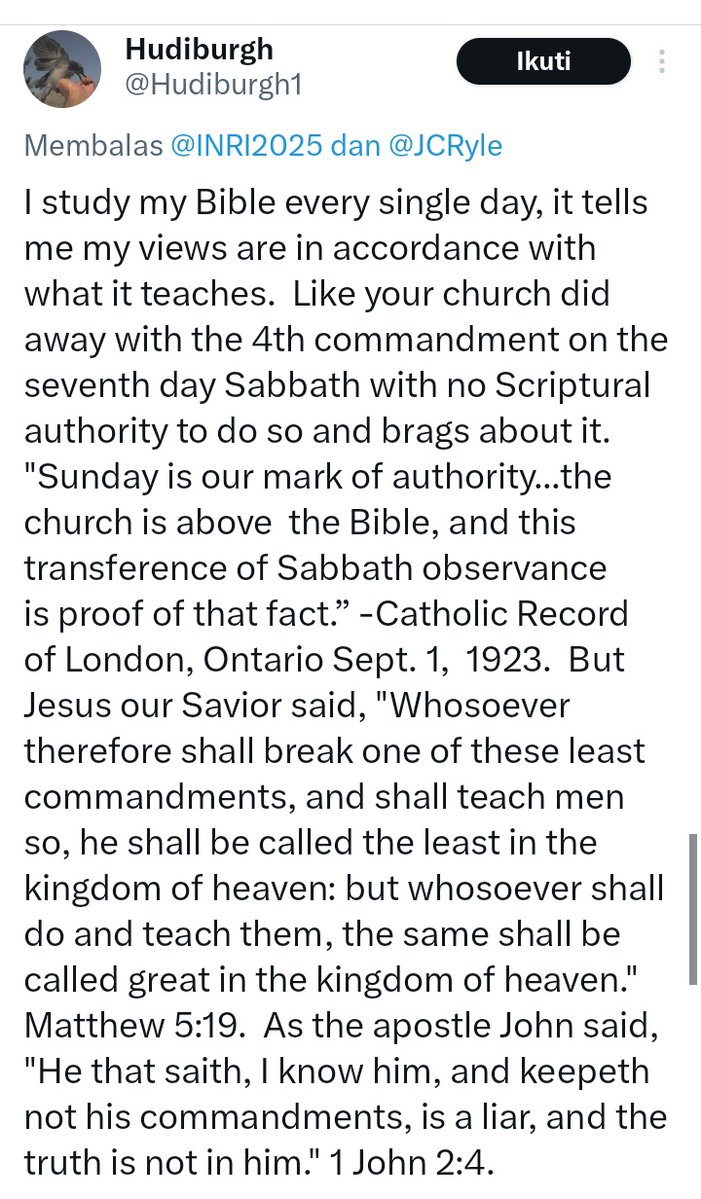
A vibrant discussion has emerged online, sparked by a tweet from @Hudiburgh1 challenging interpretations of Scriptural authority. The tweet, directed at @JCRyle, centers on the assertion that focusing solely on written scripture overlooks the role Jesus assigned to St. Peter and the Church. This debate touches upon fundamental questions about how Christians understand and apply biblical teachings.
The core of the argument presented in the initial tweet highlights several key scriptures. John 21:15-17, where Jesus instructs St. Peter to “feed His Church,” is cited as evidence of Peter’s leadership role. Acts 15:7, referencing Peter’s involvement in early Church decisions, further supports this view. Additionally, John 14:25 and Matthew 28:18-20 are invoked to emphasize the Holy Spirit’s ongoing presence with Jesus’ disciples and the Great Commission, suggesting a continuing, divinely guided authority beyond the written word.
The tweet also references John 20:30 and 21:25, pointing out that the Gospel of John itself acknowledges that not everything Jesus did was recorded. This raises the question of whether unwritten traditions and teachings also hold authority. The debate extends to interpretations of Matthew 12:1-8, which discusses Jesus’s views on the Sabbath and potentially offers insights into the balance between strict adherence to rules and a more nuanced understanding of their purpose.
This online exchange reflects a broader theological discussion concerning the relationship between Scripture, tradition, and the authority of the Church. Understanding the nuances of these different viewpoints is crucial for engaging in constructive dialogue and deepening one’s own faith.
Beyond the Bible: Unwritten Tradition and the Authority of the Church
The debate surrounding scriptural authority often centers on the role of unwritten tradition within the Church. While the Bible holds a place of paramount importance, many Christian traditions also recognize the significance of teachings and practices passed down orally or through custom. This “unwritten tradition” is viewed by some as an essential complement to scripture, providing context, interpretation, and practical application of biblical principles.
The authority of the Church, in this context, is seen as divinely ordained to safeguard and interpret both scripture and tradition. Proponents of this view often cite biblical passages that suggest the apostles imparted teachings beyond what was explicitly written down. They argue that the Church, guided by the Holy Spirit, has the responsibility to discern and maintain the authentic teachings of Christ, even those not directly found in the Bible.
This perspective raises important questions about the relationship between scripture and tradition. How do we determine the validity of unwritten traditions? What role does the Church play in this process? And how do we ensure that tradition remains consistent with the core message of the Gospel? These are complex issues that have been debated for centuries, and they continue to shape the landscape of Christian theology and practice.
Ultimately, understanding the interplay between scripture, tradition, and the authority of the Church is crucial for navigating the complexities of faith and engaging in meaningful dialogue about the foundations of Christian belief.
Analyzing the Discourse: Scriptural Interpretation in the Digital Age
The digital age has profoundly reshaped how individuals engage with and interpret scripture. Social media platforms, online forums, and readily accessible digital Bibles have democratized access to religious texts, fostering a diverse range of interpretations and discussions. This accessibility, while beneficial, also presents challenges in discerning credible interpretations from personal opinions or misrepresentations.
The trending debate surrounding Scriptural Authority, Peter’s Primacy, and the Church, as seen in online discussions, exemplifies this dynamic. Individuals often cite specific verses to support their viewpoints, leading to fragmented interpretations detached from historical context or theological tradition. The rapid-fire nature of online exchanges can prioritize catchy slogans over nuanced understanding, potentially exacerbating divisions rather than fostering constructive dialogue.
Furthermore, the anonymity afforded by the internet can embolden individuals to express extreme or unsubstantiated views, contributing to a polarized environment. It becomes crucial for individuals to cultivate critical thinking skills, consult reputable sources, and engage in respectful dialogue with those holding differing perspectives. The Church, in particular, has a vital role in providing guidance and resources for navigating the complexities of scriptural interpretation in the digital age, ensuring that faith is informed by both tradition and reason.